
Plants are among the most important living things on Earth. They provide us with food, oxygen, medicine, wood, and beautiful green spaces that make our world healthy and colorful. Teaching children about plants helps them understand how nature works and why protecting the environment is so important. One of the best ways to introduce children to science is through a simple and enjoyable plant growth project. At the Children’s Energy School, students participate in a hands-on plant growth project that combines science, environmental education, teamwork, and creativity.
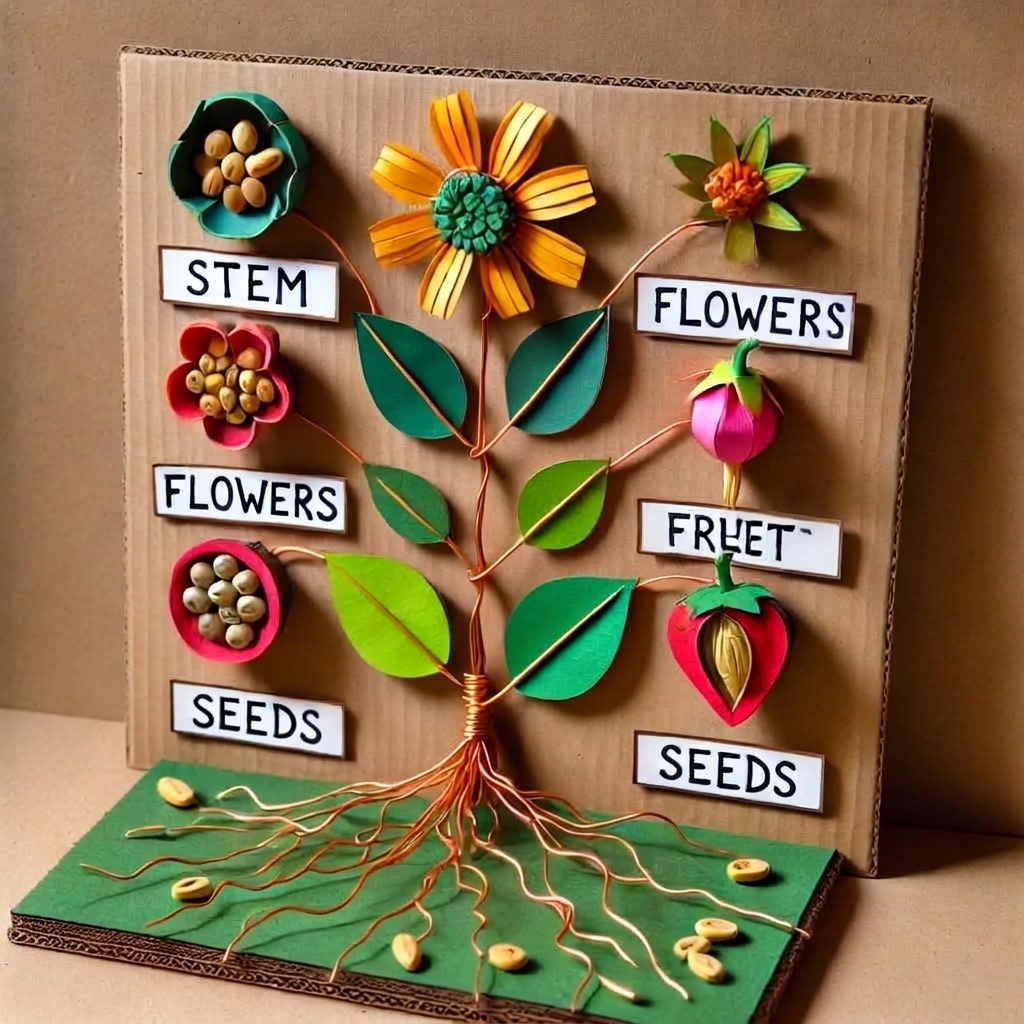
The project allows children to observe how plants grow from tiny seeds into healthy green plants. Throughout the activity, students learn about sunlight, water, soil, air, and nutrients. They also discover how renewable energy, especially solar energy, can support sustainable gardening. By caring for their plants every day, children develop responsibility, patience, observation skills, and respect for nature.
This essay explores the objectives, materials, procedures, scientific concepts, educational benefits, challenges, and exciting extensions of the Children’s Energy School Plant Growth Project.
Project Objectives
The main goals of the project are to:
- Help children understand the life cycle of plants.
- Teach the importance of sunlight, water, and healthy soil.
- Encourage scientific observation and recording.
- Introduce renewable energy concepts through solar-powered gardening tools.
- Develop teamwork and communication skills.
- Promote environmental awareness.
- Inspire curiosity and creativity.
- Build responsibility by caring for living plants.
The project turns the classroom into a small scientific laboratory where every child becomes a young researcher.
Materials Needed
The project uses inexpensive and easy-to-find materials:
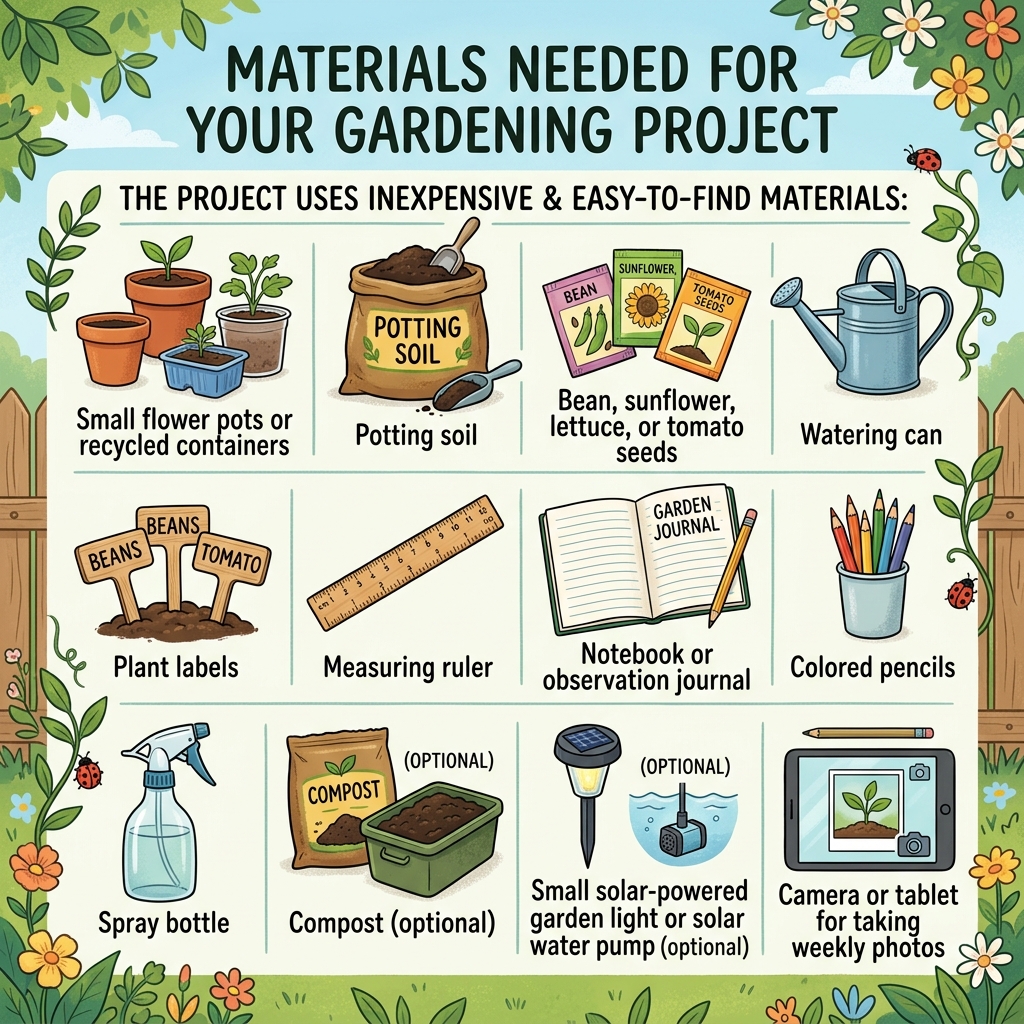
- Small flower pots or recycled containers
- Potting soil
- Bean, sunflower, lettuce, or tomato seeds
- Watering can
- Plant labels
- Measuring ruler
- Notebook or observation journal
- Colored pencils
- Spray bottle
- Compost (optional)
- Small solar-powered garden light or solar water pump (optional)
- Camera or tablet for taking weekly photos
Many of these materials can be recycled, teaching children that environmental protection begins with reducing waste.
Preparing the Experiment
The teacher begins by explaining that every seed contains a tiny plant waiting to grow. Children examine different seeds and compare their size, shape, and color.
Each student fills a pot with soil, plants several seeds, covers them lightly with soil, and waters them carefully.
The pots are placed near a sunny window or outside in a safe school garden where they receive enough sunlight.
Every pot receives a label with:
- Student’s name
- Plant type
- Planting date
This helps children organize their scientific observations.
Learning About Plant Needs
Before growth begins, students discuss what plants need to survive.
Sunlight
Plants use sunlight to produce food through photosynthesis. Without enough sunlight, plants become weak and pale.
Water
Water carries nutrients from the soil to every part of the plant. Too much water can damage roots, while too little causes plants to dry out.
Air
Plants absorb carbon dioxide from the air and release oxygen, making Earth’s atmosphere healthier.
Soil
Healthy soil provides minerals, nutrients, and support for roots.
Warmth
Most plants grow best in warm temperatures, especially during spring and summer.
Understanding these basic needs helps children predict how different conditions affect plant growth.
Daily Observation
Every day, students observe their plants carefully.
They record:
- Plant height
- Number of leaves
- Stem thickness
- Leaf color
- Soil moisture
- Weather conditions
- Watering schedule
Children also draw pictures showing how their plants change over time.
Keeping observation journals teaches students that science depends on careful measurement rather than guessing.
Weekly Growth Measurements
Each week, students use rulers to measure their plants.
A simple observation table may include:
| Week | Plant Height | Number of Leaves | Notes |
| 1 | 2 cm | 2 | Seedling appeared |
| 2 | 6 cm | 4 | Bright green leaves |
| 3 | 11 cm | 7 | Strong stem |
| 4 | 17 cm | 10 | Healthy growth |
The measurements help students see gradual changes that might otherwise go unnoticed.
Understanding Photosynthesis
One of the most exciting lessons is learning about photosynthesis.
The teacher explains that plants make their own food using:
- Sunlight
- Water
- Carbon dioxide
During this process, plants produce oxygen.
Children enjoy discovering that plants act like tiny natural food factories powered entirely by sunlight.
This lesson also helps students appreciate why forests and gardens are essential for life on Earth.
Using Renewable Energy
Since the school focuses on energy education, renewable energy becomes part of the project.
Students may use:
- Solar-powered irrigation systems
- Solar garden lights
- Solar weather stations
- Solar water pumps
These tools demonstrate how clean energy supports sustainable agriculture without polluting the environment.
Children learn that renewable energy protects nature while helping plants grow efficiently.
Scientific Experiments
The project can include several simple experiments.
Experiment 1: Light vs. Darkness
One plant receives sunlight.
Another stays in a dark cupboard.
Children observe that the dark-grown plant becomes weak and yellow.
Experiment 2: Different Amounts of Water
Three plants receive:
- Little water
- Normal water
- Too much water
Students compare which plant grows best.
Experiment 3: Different Soils
Plants are grown in:
- Garden soil
- Sand
- Compost-rich soil
Children compare growth rates and leaf color.
These experiments teach children that scientists test one variable at a time.
Recording Results
Students organize their observations using:
- Tables
- Bar graphs
- Drawings
- Photographs
- Growth diaries
Creating graphs helps children practice mathematics while analyzing scientific data.
They learn to identify patterns and explain why some plants grow faster than others.
Classroom Discussions
Teachers encourage students to ask questions such as:
- Why are some plants taller?
- Why did one plant stop growing?
- What happens if plants receive too much water?
- Why do leaves change color?
- Which conditions produce the healthiest plants?
These discussions develop critical thinking and scientific reasoning.
Environmental Awareness
The project teaches children that healthy plants improve our world.
Plants:
- Produce oxygen
- Absorb carbon dioxide
- Reduce pollution
- Prevent soil erosion
- Provide food
- Support wildlife
- Cool the environment
Children begin to understand that planting trees and protecting forests benefit everyone.
Teamwork
Although every child grows an individual plant, many activities are completed together.
Students:
- Share tools
- Compare observations
- Help classmates
- Water classroom plants
- Present discoveries
Working together strengthens cooperation and communication skills.
Creativity
Science and art are combined throughout the project.
Children may:
- Decorate plant pots
- Design garden signs
- Draw plant life cycles
- Create leaf paintings
- Build miniature gardens
- Write short stories about growing plants
Creative activities make learning enjoyable for students with different interests.
Cross-Curricular Learning
The project connects many school subjects.
Science
- Plant biology
- Photosynthesis
- Life cycles
Mathematics
- Measuring height
- Creating graphs
- Counting leaves
Language
- Writing journals
- Presenting observations
- Learning scientific vocabulary
Art
- Plant drawings
- Posters
- Garden decorations
Environmental Studies
- Sustainability
- Recycling
- Renewable energy
Children realize that knowledge from different subjects works together.
Common Challenges
Sometimes plants do not grow as expected.
Possible problems include:
- Too much water
- Too little sunlight
- Poor soil
- Cold temperatures
- Insects
- Mold
Instead of viewing these as failures, students learn that mistakes provide valuable scientific information.
Every unsuccessful experiment teaches something new.
Family Participation
Parents can continue the learning experience at home.
Families may:
- Grow herbs together.
- Start vegetable gardens.
- Visit local parks.
- Plant trees.
- Compost kitchen waste.
- Build simple rain collectors.
When learning continues outside school, children become even more interested in science.
Presentation Day
At the end of the project, students organize a classroom exhibition.
Each child presents:
- Their plant
- Growth journal
- Measurements
- Drawings
- Photographs
- Scientific conclusions
Parents, teachers, and classmates visit the exhibition and celebrate the children’s achievements.
Presenting their work builds confidence and public speaking skills.
Long-Term Impact
Although the project lasts only a few weeks, its lessons remain valuable for many years.
Children learn that:
- Nature requires care.
- Science is based on observation.
- Renewable energy protects the environment.
- Every small action can improve the planet.
- Growing food takes patience and responsibility.
Many students become interested in gardening, environmental science, or renewable energy after completing the project.
Conclusion
The Plant Growth Project at the Children’s Energy School is much more than a simple gardening activity. It is a complete educational experience that combines science, mathematics, environmental awareness, creativity, and teamwork in an engaging and meaningful way. By planting seeds, caring for living plants, and observing daily changes, children develop valuable scientific skills while building a lifelong appreciation for nature.
The project also introduces renewable energy by demonstrating how solar-powered tools can support sustainable gardening and reduce environmental impact. Through experiments, observations, discussions, and creative activities, students discover that learning becomes exciting when they actively participate in the process.
Most importantly, the project teaches children that every seed represents hope, growth, and the future. Just as a tiny seed grows into a strong and healthy plant with proper care, children also grow through curiosity, patience, kindness, and education. The Children’s Energy School Plant Growth Project inspires young learners to become responsible citizens who value science, protect the environment, and work together to build a greener and healthier world.
