
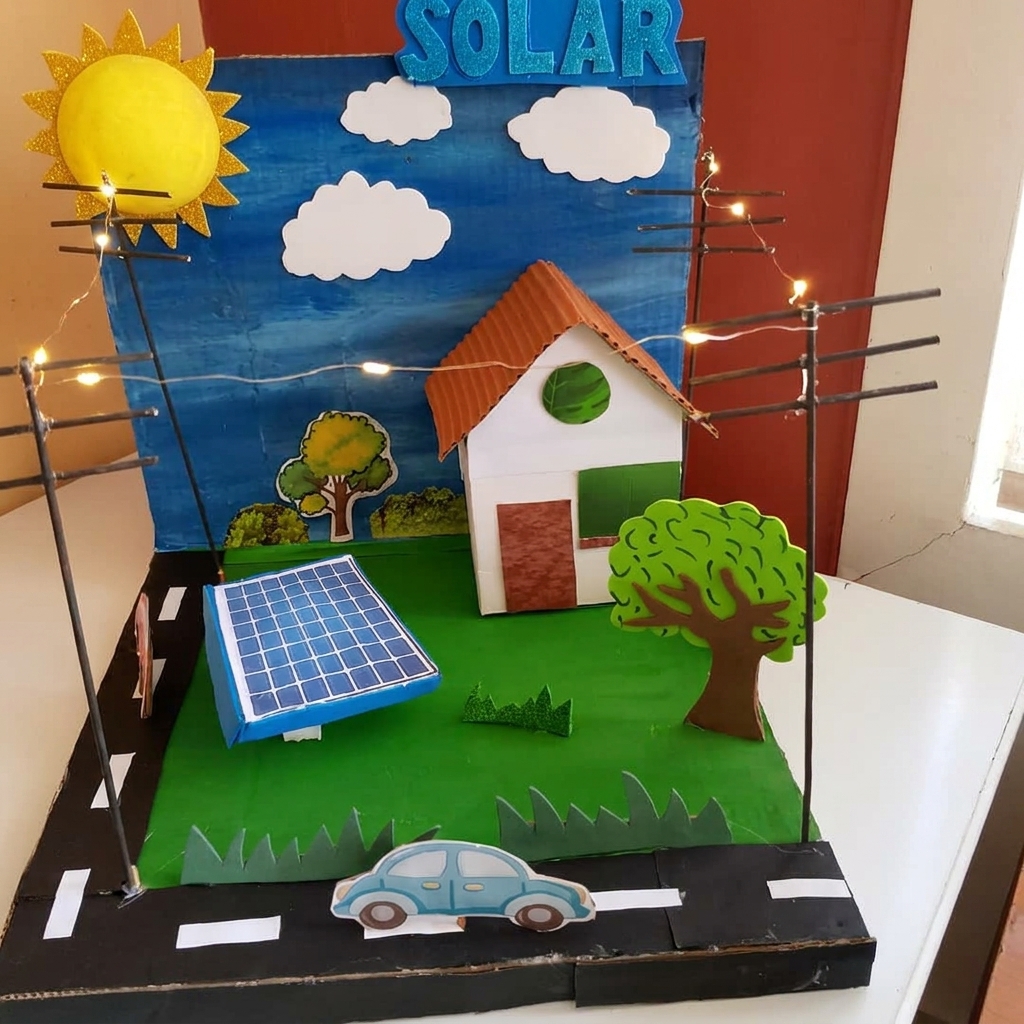
Solar energy is one of the most amazing gifts that nature provides. Every day, the Sun shines brightly and gives us light and warmth. Without the Sun, plants would not grow, animals could not survive, and life on Earth would be impossible. Today, people also use the Sun to produce clean electricity and heat. This type of energy is called solar energy. It is renewable, which means it will never run out as long as the Sun continues to shine.
Teaching children about solar energy is important because they are the future caretakers of our planet. By learning how the Sun can produce useful energy, children begin to understand the importance of protecting the environment and reducing pollution. One of the best ways to teach this topic is through a simple school project that is fun, safe, and educational.
A simple solar oven made from a pizza box is an excellent project for elementary school students. It is easy to build using recycled materials and demonstrates how sunlight can be transformed into heat energy. Children can see science in action while developing creativity, teamwork, observation skills, and problem-solving abilities. Instead of only reading about renewable energy, they experience it firsthand through a practical experiment.
Quick Overview
| Item | Details |
| Project Name | Simple Solar Oven |
| Age Group | 7–12 Years |
| Difficulty Level | Easy |
| Time Required | 1–2 Hours |
| Materials Needed | Pizza box, aluminum foil, black paper, plastic wrap, tape, glue, scissors, ruler, wooden stick |
| Learning Topics | Solar energy, renewable energy, heat transfer, recycling |
| Main Objective | Learn how sunlight can be converted into heat energy |
What Is Solar Energy?
Solar energy is the energy that comes from the Sun. Every second, the Sun sends enormous amounts of light and heat toward Earth. People have discovered many ways to capture this energy and use it in everyday life.
Solar panels convert sunlight into electricity. Solar water heaters use sunlight to warm water. Solar-powered calculators, garden lights, and phone chargers all depend on energy from the Sun. Unlike coal, oil, and natural gas, solar energy does not produce harmful pollution while generating electricity. It is considered one of the cleanest and safest energy sources available today.
Children can understand solar energy with one simple idea: Sunlight contains energy that can be changed into heat or electricity.
Why Is This Project Important?
Hands-on science projects help children understand difficult ideas more easily. Instead of memorizing facts from a textbook, students learn by observing, building, testing, and experimenting.
A simple solar oven project teaches children several important lessons:
- Renewable energy is clean and environmentally friendly.
- Recycled materials can be reused creatively.
- Science helps solve real-life problems.
- Careful observation leads to discovery.
- Teamwork makes projects more successful.
These lessons help children become curious learners and responsible citizens.
Materials Needed
One of the best features of this project is that it uses inexpensive materials that are often already available at home or school.
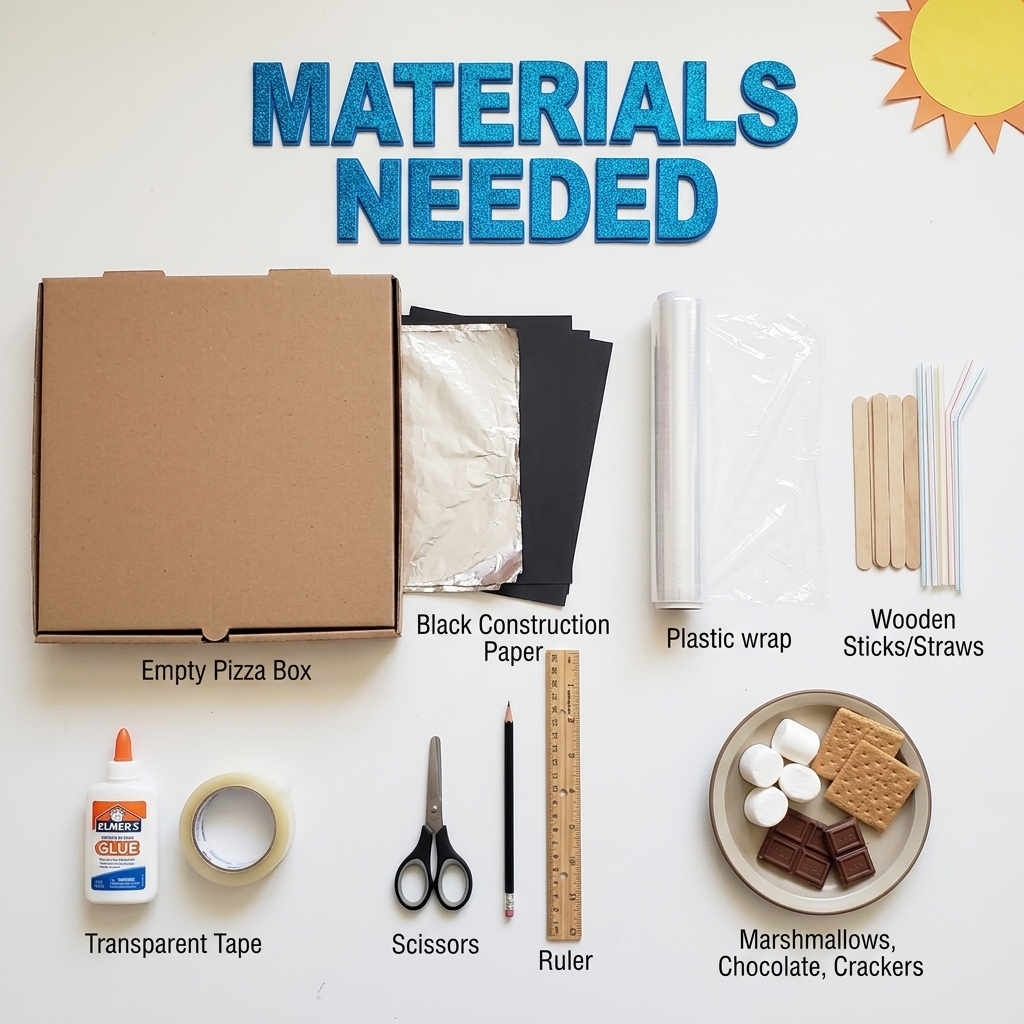
You will need:
- One empty pizza box
- Aluminum foil
- Black construction paper
- Clear plastic wrap
- Glue
- Transparent tape
- Scissors
- Pencil
- Ruler
- Wooden stick or straw
- Marshmallows, chocolate, or crackers for testing
Using recycled materials also teaches children the importance of reducing waste and protecting the environment.
Safety Rules
Safety should always come first during any science activity.
Children should remember these rules:
- Ask an adult for help when using scissors.
- Never look directly at the Sun.
- Wash hands before and after handling food.
- Be careful when touching warm objects.
- Work on a clean, flat surface.
- Keep the project away from water and strong winds.
Following these simple rules helps everyone enjoy the experiment safely.
Step-by-Step Instructions
Step 1: Prepare the Pizza Box
Close the pizza box and draw a large square on the top. Leave about two centimeters around the edges. Carefully cut along three sides of the square, leaving one side attached to create a flap.
Step 2: Add Aluminum Foil
Cover the inside of the flap with aluminum foil. Make sure the shiny side faces outward because it reflects sunlight. Smooth the foil carefully and tape it securely.
Step 3: Create the Window
Cover the opening with clear plastic wrap and tape it tightly around the edges. This clear window lets sunlight enter while trapping warm air inside the box.
Step 4: Place the Black Paper
Glue black construction paper to the bottom inside the pizza box. Black surfaces absorb more sunlight than light-colored surfaces, helping the oven become warmer.
Step 5: Position the Reflector
Use a wooden stick to hold the foil-covered flap open. Adjust the angle so the foil reflects as much sunlight as possible into the box.
Step 6: Test the Solar Oven
Place a marshmallow or a small piece of chocolate inside the oven. Close the lid and leave the box in direct sunlight for about 30 to 45 minutes. Observe what happens. The food should become warm or begin to melt.
How Does the Solar Oven Work?
The solar oven works because sunlight carries energy. Several scientific principles work together to produce heat.
First, the aluminum foil reflects sunlight into the box. Second, the clear plastic wrap allows sunlight to enter but traps warm air inside. Third, the black paper absorbs sunlight and converts it into heat energy. Finally, the cardboard box acts as insulation, reducing heat loss.
Together, these parts create a simple solar oven that demonstrates how renewable energy can be used without electricity or fuel.
Scientific Concepts Children Learn
This project introduces several important scientific ideas.
Reflection: The shiny aluminum foil reflects sunlight toward the inside of the box.
Absorption: Black paper absorbs sunlight better than white paper and changes light energy into heat.
Heat Retention: The plastic wrap traps warm air inside, creating a greenhouse effect.
Energy Conversion: Sunlight changes into heat energy that can warm food.
Understanding these concepts helps children appreciate how science works in everyday life.
Recording Observations
Scientists always record what they observe during experiments. Children can create a simple observation table with information such as:
- Date
- Time
- Weather conditions
- Outdoor temperature
- Inside temperature
- Type of food tested
- Time needed to warm the food
- Final observations
Keeping records teaches children to organize information and think like real scientists.
Questions to Explore
Children can continue learning by asking interesting questions.
For example:
- Does black paper absorb more heat than white paper?
- Which time of day produces the highest temperature?
- Does cloudy weather affect the oven?
- Would a larger reflector collect more sunlight?
- Does the project work during winter?
Asking questions encourages curiosity and scientific thinking.
Classroom Activities
Teachers can use this project in many creative ways.
Students can work in small groups to build different solar ovens and compare their results. They can measure temperatures every ten minutes, draw diagrams of how the oven works, or create posters explaining renewable energy. Older students can even calculate temperature differences and discuss energy efficiency.
These activities combine science, engineering, mathematics, teamwork, and communication skills.
Environmental Benefits
Solar energy has many advantages for our planet.
It does not produce smoke or harmful gases. It helps reduce air pollution and greenhouse gas emissions. It also decreases our dependence on fossil fuels such as coal and oil.
By learning about renewable energy, children understand that small actions today can help create a cleaner and healthier world tomorrow.
Real-Life Uses of Solar Energy
Solar energy is used in many places around the world. Homes have solar panels on their roofs to generate electricity. Schools use solar systems to reduce energy costs. Streetlights, calculators, watches, satellites, and even some cars use solar power.
Learning about these real-life applications helps children connect classroom science with everyday technology.
Improving the Project
After completing the basic solar oven, children can improve their designs.
They can add extra layers of insulation, test different reflector sizes, compare black and colored paper, or use thermometers to measure temperatures more accurately. They can also compare results from sunny and cloudy days.
Making improvements teaches children that science is a process of continuous learning and experimentation.
Conclusion
A simple solar energy school project is an exciting way to introduce children to renewable energy and environmental science. By building a solar oven from recycled materials, students learn that sunlight can be transformed into useful heat without using electricity or fossil fuels. Throughout the project, they discover important scientific concepts such as reflection, absorption, insulation, and energy conversion while developing creativity, teamwork, observation, and problem-solving skills.
This project also encourages children to care for the environment by showing them the value of clean energy and recycling. Most importantly, it demonstrates that science can be both educational and enjoyable. With simple materials, curiosity, and a sunny day, young learners can experience the incredible power of the Sun and gain a deeper appreciation for the world around them. A small classroom project like this may even inspire the next generation of scientists, engineers, and environmental leaders who will continue developing innovative ways to use renewable energy for a brighter and cleaner future.
