
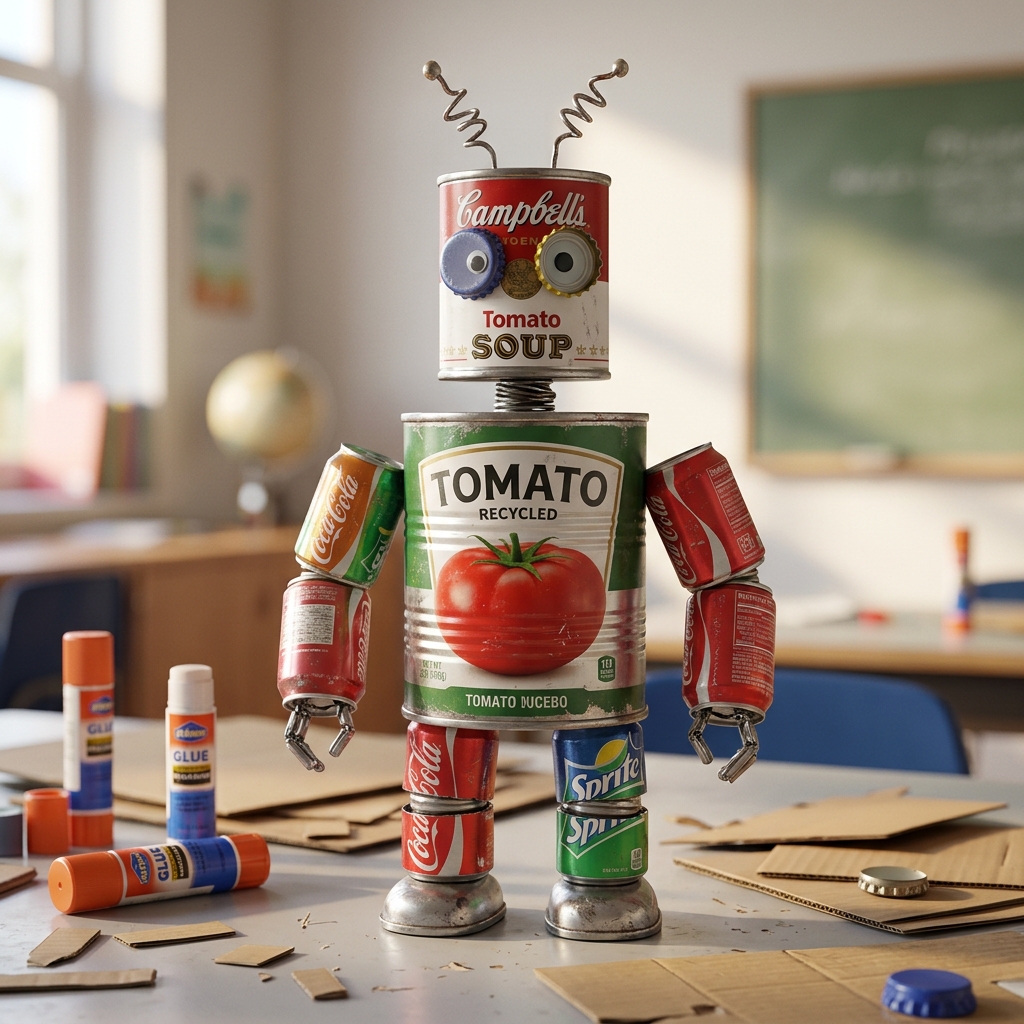
School projects are an exciting way for children to learn through creativity and hands-on activities. Instead of only reading books or listening to lessons, students can build, create, explore, and experiment. One of the most enjoyable and educational types of school projects involves using recycled materials. These projects teach children that many everyday items, which are often thrown away, can be transformed into useful, beautiful, and creative objects.
Recycling helps protect the environment by reducing waste and conserving natural resources. When children learn to reuse materials such as cardboard boxes, plastic bottles, paper rolls, egg cartons, bottle caps, and old newspapers, they begin to understand the importance of caring for the Earth. At the same time, they develop creativity, problem-solving skills, teamwork, and confidence.
Easy school projects using recycled materials are suitable for classrooms, science fairs, art lessons, environmental education programs, and home learning. They are inexpensive, easy to organize, and enjoyable for children of different ages.
Why Recycling Is Important
Every day, people throw away large amounts of paper, plastic, glass, and metal. Much of this waste can be recycled or reused instead of ending up in landfills.
Recycling offers many benefits. It helps reduce pollution, saves energy, conserves natural resources, and protects wildlife. It also decreases the amount of waste produced by homes and schools.
Teaching children about recycling at an early age encourages them to develop environmentally friendly habits that can last a lifetime. Small actions, such as reusing a cardboard box or making a craft from a plastic bottle, can help children understand that everyone can contribute to protecting the environment.
Benefits of School Recycling Projects
School projects made from recycled materials provide many educational benefits.
Children improve:
- Creativity and imagination
- Fine motor skills
- Hand-eye coordination
- Problem-solving abilities
- Teamwork and communication
- Patience and concentration
- Organizational skills
- Environmental awareness
These activities also encourage children to think creatively about how ordinary objects can be transformed into something useful.
Common Recycled Materials
Many everyday household items can become valuable craft supplies.
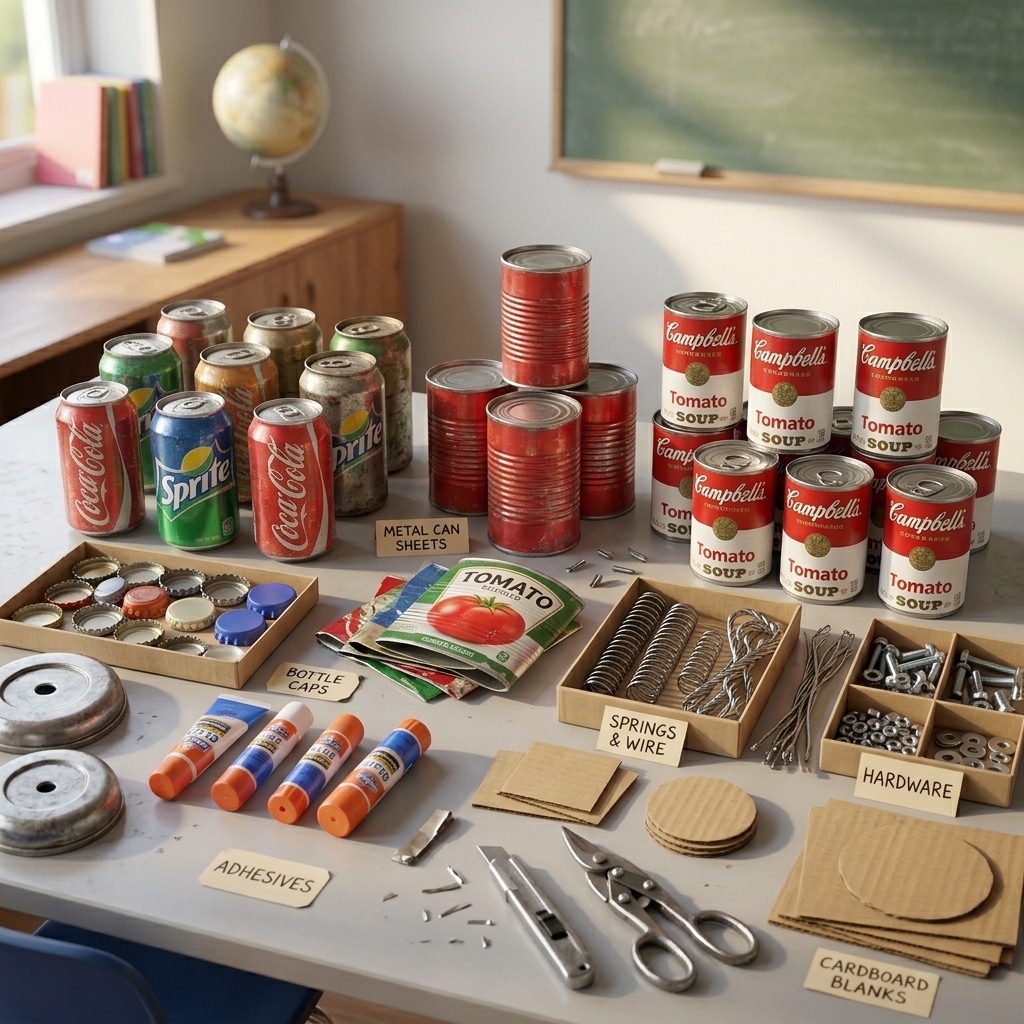
Useful recycled materials include:
- Cardboard boxes
- Cereal boxes
- Shoe boxes
- Toilet paper rolls
- Paper towel tubes
- Plastic bottles
- Bottle caps
- Egg cartons
- Newspapers
- Magazines
- Old greeting cards
- Scrap paper
- Fabric scraps
- Popsicle sticks
- Tin cans
- Corks
- String
- Buttons
Before using any recycled material, it should be cleaned and checked to make sure it is safe for children.
Project 1: Pencil Holder from a Tin Can
A clean tin can can easily become a colorful pencil holder.
Children decorate the outside with colored paper, paint, stickers, ribbon, or fabric. They can also draw their names or favorite designs on it.
This project teaches children that simple household items can become practical school supplies.
Project 2: Bird Feeder from a Plastic Bottle
An empty plastic bottle can be transformed into a bird feeder.
Small openings are cut into the bottle, wooden spoons or sticks are inserted, and birdseed is added.
The finished feeder can be hung outside, allowing children to observe birds while learning about nature and wildlife.
Project 3: Cardboard Picture Frame
Old cardboard boxes make excellent picture frames.
Children cut out the frame, decorate it with buttons, leaves, colored paper, glitter, or recycled magazine pictures, and place a favorite drawing or family photo inside.
This activity combines art with recycling.
Project 4: Flower Garden from Egg Cartons
Egg cartons can be cut into individual flower shapes.
After painting them in bright colors, children attach stems made from pipe cleaners, straws, or rolled paper.
These flowers can decorate classrooms or be given as handmade gifts.
Project 5: Robot from Cardboard Boxes
Children love building robots.
Using small boxes, bottle caps, paper tubes, and foil, they can create imaginative robot figures with movable arms, colorful faces, and creative decorations.
Each child can invent a unique robot with its own name and personality.
Project 6: Mini Greenhouse
A clear plastic bottle can become a miniature greenhouse.
Children plant seeds inside and observe how the plants grow over several weeks.
This project combines recycling with science and teaches responsibility through plant care.
Project 7: Bookmark from Cereal Boxes
Old cereal boxes provide strong cardboard for making bookmarks.
Children cut colorful strips, decorate them with drawings, inspirational quotes, or stickers, and laminate them if possible.
The bookmarks encourage reading while promoting recycling.
Project 8: Wind Chime
Bottle caps, old keys, shells, sticks, and string can be combined to make a beautiful wind chime.
Children enjoy listening to the sounds it makes when hanging outside.
This project introduces simple concepts of sound and movement.
Project 9: Marble Run
Paper towel rolls and toilet paper tubes can be attached to cardboard to build a marble run.
Children experiment with different paths, slopes, and designs until the marble rolls smoothly.
This activity introduces basic ideas about gravity, speed, and engineering.
Project 10: Toy Car from Recycled Materials
Children can create toy cars using cardboard, bottle caps for wheels, and wooden skewers or straws for axles.
After decorating their vehicles, they can organize friendly classroom races.
This project encourages creativity and basic engineering skills.
Learning Through Creativity
Creative activities help children think independently.
Rather than following only one correct answer, they discover many possible solutions to a problem.
For example, one child may use a cereal box to build a castle, while another turns it into a puppet theater.
This freedom strengthens imagination and self-confidence.
Developing Fine Motor Skills
Many recycling projects require children to:
- Cut
- Fold
- Glue
- Paint
- Draw
- Measure
- Assemble
These actions improve finger strength, coordination, and precision, all of which support handwriting and other classroom skills.
Encouraging Teamwork
Many recycled-material projects are perfect for group work.
Children learn to:
- Share materials
- Divide responsibilities
- Listen to each other’s ideas
- Solve problems together
- Celebrate shared achievements
These experiences strengthen communication and cooperation.
Connecting Different School Subjects
Recycling projects fit naturally into many areas of learning.
In art, children create colorful crafts.
In science, they learn about materials, ecosystems, and environmental protection.
In mathematics, they measure, count, compare sizes, and build symmetrical designs.
In language lessons, they write instructions, describe their projects, or present their work to classmates.
Social studies lessons can include discussions about waste reduction and caring for the community.
Building Environmental Awareness
One of the greatest benefits of recycling projects is that they help children understand environmental responsibility.
Students learn that:
- Waste can often be reused.
- Recycling saves natural resources.
- Pollution can be reduced.
- Small actions make a difference.
- Everyone can help protect the planet.
These lessons encourage lifelong habits that benefit both people and nature.
The Teacher’s Role
Teachers guide children throughout each project by providing instructions, preparing materials, and ensuring safety.
However, they should also encourage students to make their own creative decisions.
There is no single “perfect” project. Every child’s work reflects individual imagination and effort.
Positive encouragement helps children feel proud of their achievements.
Family Involvement
Parents can support school recycling projects by collecting clean materials at home.
Families may save:
- Cardboard boxes
- Plastic containers
- Egg cartons
- Bottle caps
- Newspapers
- Fabric scraps
Children often become excited when they discover useful materials at home, making recycling a family activity rather than just a school assignment.
Safety During Craft Activities
Safety is always important.
Children should use child-safe scissors.
Sharp tools should only be handled by adults or under close supervision.
Glue, paint, and markers should be non-toxic.
All recycled materials should be washed and checked for sharp edges before use.
Workspaces should remain clean and organized to prevent accidents.
Tips for Successful Recycling Projects
A few simple ideas help projects run smoothly.
Gather materials well in advance.
Choose projects that match the children’s ages and abilities.
Allow enough time for creativity rather than rushing.
Encourage children to experiment with their own ideas.
Display finished projects in the classroom to celebrate everyone’s work and inspire others.
Conclusion
Easy school projects using recycled materials provide children with valuable opportunities to learn, create, and protect the environment at the same time. By transforming everyday waste into useful crafts and creative models, students discover that imagination can give new life to ordinary objects. These activities develop creativity, fine motor skills, teamwork, communication, and problem-solving while making learning enjoyable and meaningful.
In addition to supporting academic growth, recycling projects encourage children to become responsible citizens who care about the world around them. They learn that reducing waste, reusing materials, and recycling are practical ways to protect natural resources and reduce pollution. These lessons help build habits that can continue throughout their lives.
Whether making pencil holders, bird feeders, toy cars, picture frames, robots, or miniature greenhouses, children gain confidence through hands-on experiences. Every completed project demonstrates that simple materials, creative thinking, and teamwork can produce impressive results. Most importantly, these activities show that learning is not limited to textbooks—it can happen through exploration, imagination, and the joy of creating something new from materials that might otherwise have been thrown away.
