
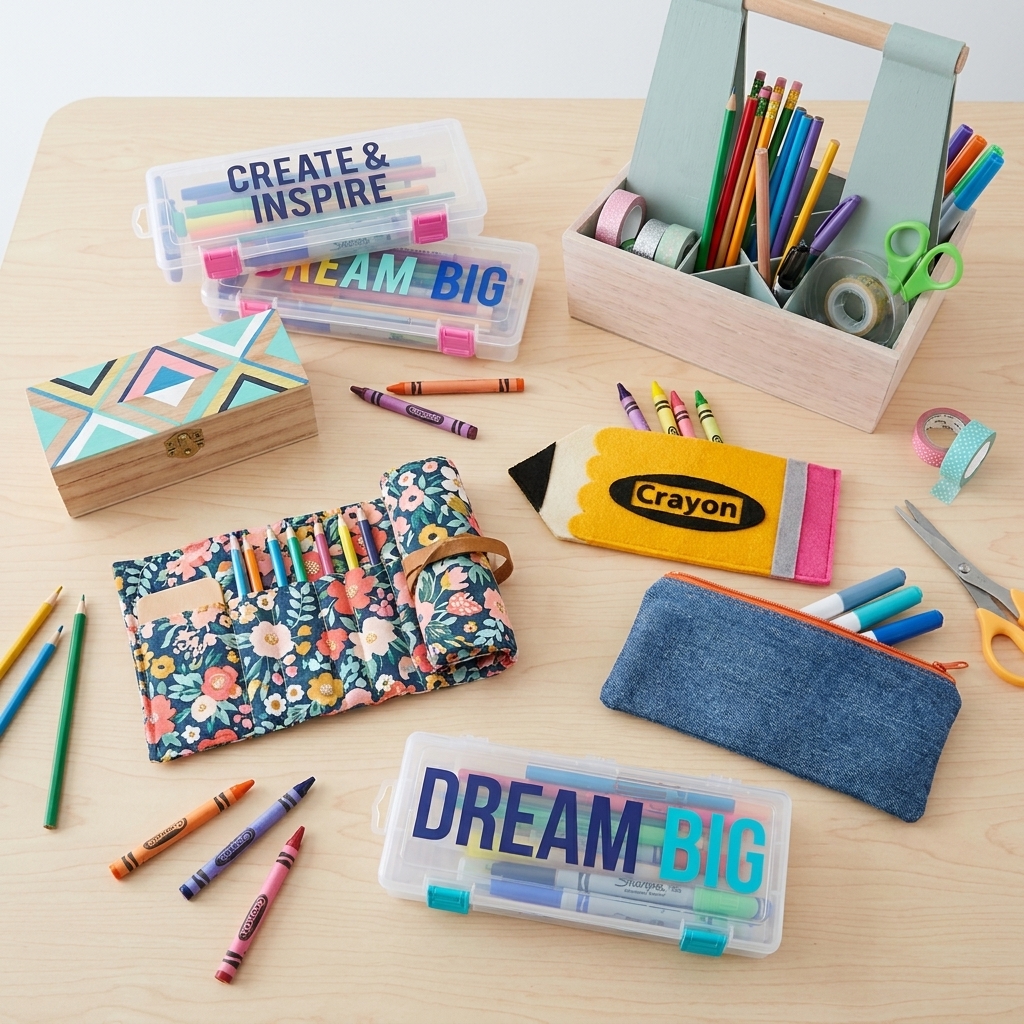
Cardboard is one of the most versatile and accessible crafting materials available. Instead of throwing away empty cereal boxes, shipping boxes, or packaging, you can transform them into practical and beautiful items. One of the most rewarding cardboard projects is making a pencil case. This simple craft combines creativity, organization, and environmental responsibility while helping children and adults develop useful crafting skills. A handmade cardboard pencil case is not only functional but also customizable, allowing each creator to design a unique storage solution for school or home.
Before exploring the complete process, here is a quick overview of the project.
| Quick Overview | Details |
| Activity | Making a Pencil Case from Cardboard |
| Recommended Age | 7+ years (with adult supervision when using sharp tools) |
| Time Required | 60–90 minutes |
| Difficulty Level | Easy to Moderate |
| Main Materials | Cardboard, ruler, pencil, scissors or craft knife, glue, decorative paper, paint |
| Skills Developed | Creativity, measuring, fine motor skills, organization, recycling awareness |
| Best For | Home crafts, classrooms, school projects, rainy-day activities |
Introduction
Crafting with recycled materials is an enjoyable and meaningful activity that encourages creativity while reducing waste. Cardboard, often discarded after packages are opened, has endless possibilities for creative reuse. One practical project that both children and adults can enjoy is making a pencil case from cardboard.
A pencil case keeps school supplies organized and protected. Instead of buying a plastic pencil case from a store, creating one from recycled cardboard allows individuals to personalize every detail while learning valuable crafting skills. This project is inexpensive, environmentally friendly, and suitable for families, classrooms, and community workshops.
Making a cardboard pencil case also introduces basic engineering concepts such as measuring, cutting, assembling, and designing. Every step requires planning and attention to detail, making the activity educational as well as entertaining.
Why Make a Pencil Case from Cardboard?
There are many reasons why this craft is worth trying.
First, it promotes recycling by giving used cardboard a second life. Instead of ending up in a landfill, cardboard becomes a useful everyday object.
Second, handmade pencil cases cost very little because most materials are already available at home.
Third, every pencil case is unique. Children can decorate theirs with favorite colors, patterns, stickers, drawings, or inspirational quotes.
Finally, building something useful with your own hands creates a sense of accomplishment and pride.
Educational Benefits
Creating a cardboard pencil case develops numerous practical skills.
Fine Motor Skills
Measuring, folding, cutting, and gluing strengthen hand muscles and improve coordination.
Mathematical Thinking
Children practice measuring lengths, understanding shapes, and following dimensions accurately.
Problem-Solving
If pieces do not fit correctly, children learn how to adjust their designs and solve construction challenges.
Creativity
Designing decorations encourages artistic expression and imagination.
Environmental Awareness
Children understand the importance of reducing waste and reusing everyday materials.
Materials Needed
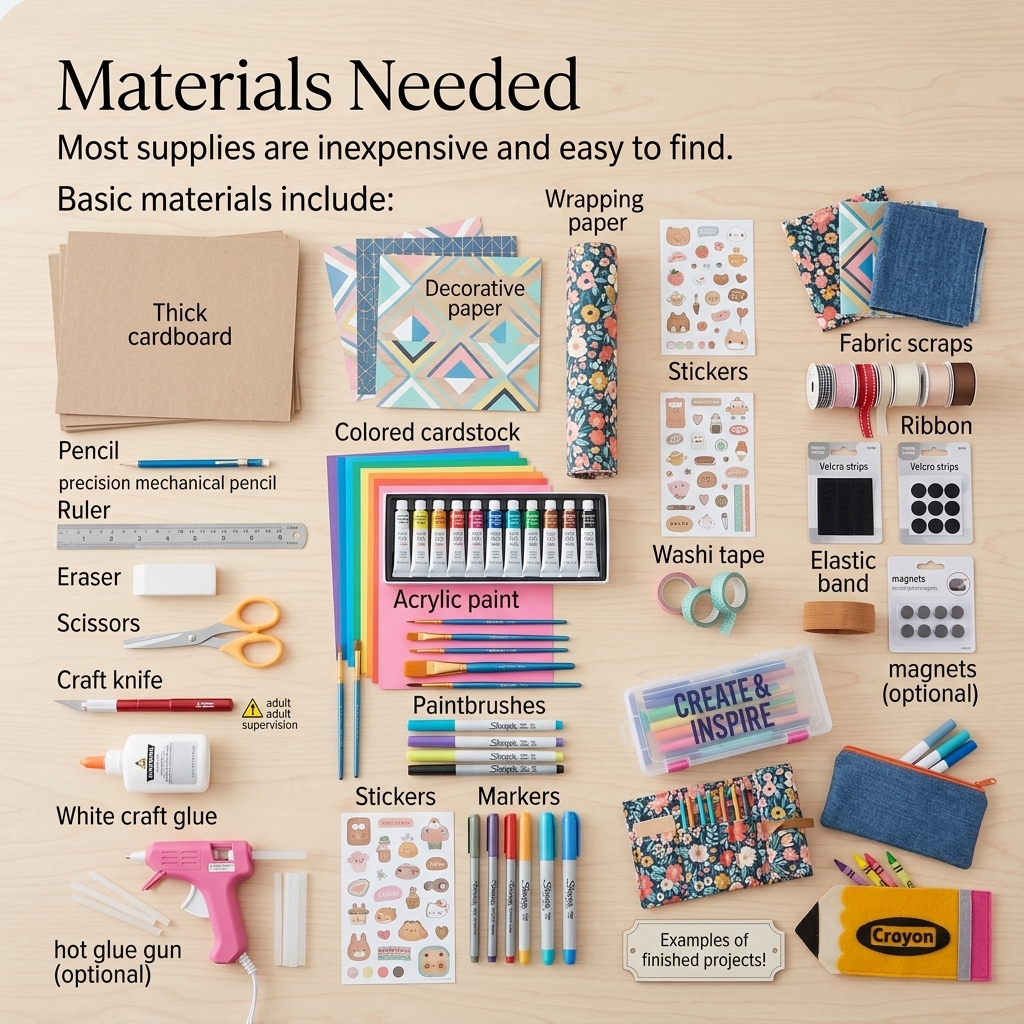
Most supplies are inexpensive and easy to find.
Basic materials include:
- Thick cardboard
- Pencil
- Ruler
- Eraser
- Scissors
- Craft knife (adult supervision)
- White craft glue
- Hot glue gun (optional)
- Decorative paper
- Wrapping paper
- Colored cardstock
- Acrylic paint
- Paintbrushes
- Markers
- Stickers
- Washi tape
- Fabric scraps
- Ribbon
- Velcro strips
- Elastic band
- Magnets (optional)
Using recycled materials makes the project both affordable and environmentally friendly.
Choosing the Right Cardboard
Different cardboard types produce different results.
Cereal boxes are lightweight and easy to cut.
Shipping boxes are stronger and provide greater durability.
Corrugated cardboard offers excellent protection for pencils but may require more careful cutting.
Choose cardboard that is clean, dry, and free from significant damage.
Planning the Pencil Case
Before cutting anything, decide what the pencil case will hold.
Ask questions such as:
- How many pencils?
- Will it store markers?
- Should it include an eraser compartment?
- Will it carry scissors?
- Should it fit inside a backpack?
Sketching a simple design helps avoid mistakes later.
Measuring the Pieces
Accurate measurements are essential.
Typical measurements might include:
- Base
- Lid
- Side panels
- Front panel
- Back panel
Using a ruler ensures straight edges and neat assembly.
Mark fold lines lightly with a pencil before cutting.
Cutting the Cardboard
Carefully cut each piece along the marked lines.
Young children should use child-safe scissors whenever possible.
Adults should handle craft knives for thicker cardboard.
Clean cuts make assembly easier and produce a more professional appearance.
Folding the Cardboard
Many pencil cases require folded edges.
Before folding thick cardboard, gently score the fold line using the back of a craft knife or a blunt object.
This creates cleaner folds without tearing the material.
Take your time to ensure sharp, straight corners.
Assembling the Pencil Case
Apply glue evenly to the connecting edges.
Join the base, sides, front, and back panels.
Allow the glue to dry before attaching the lid.
Clips or clothespins can temporarily hold the pieces together while drying.
Patience during this stage results in a stronger pencil case.
Creating Different Closure Systems
There are several ways to keep the pencil case closed.
Elastic Band
An elastic loop is simple and effective.
Velcro
Self-adhesive Velcro provides an easy reusable closure.
Magnetic Closure
Small craft magnets create a neat invisible fastening system.
Ribbon Tie
A decorative ribbon adds elegance while securing the lid.
Each option offers different advantages depending on the design.
Decorating the Pencil Case
Decoration is where creativity truly shines.
Popular decoration ideas include:
- Painting colorful patterns
- Covering with wrapping paper
- Applying stickers
- Drawing cartoon characters
- Writing motivational quotes
- Adding glitter
- Using washi tape
- Creating geometric designs
- Covering with fabric
- Decorating with pressed flowers
No two pencil cases need to look alike.
Painting Techniques
Acrylic paints provide bright colors and good coverage.
Possible painting ideas include:
- Rainbow stripes
- Polka dots
- Galaxy theme
- Animal prints
- Floral designs
- Abstract art
- School-themed graphics
Allow each layer to dry before adding additional details.
Waterproofing the Surface
Although cardboard is not naturally waterproof, it can be protected.
Options include:
- Clear craft varnish
- Decoupage glue
- Transparent adhesive film
- Laminating sheets
These finishes help the pencil case last longer and resist light moisture.
Organizing the Interior
The inside of the pencil case can be divided into sections.
Possible compartments include:
- Pencil holder
- Pen section
- Eraser pocket
- Sharpener space
- Ruler compartment
- Sticky note holder
Adding dividers makes organization easier.
Creative Design Ideas
The project can be personalized in countless ways.
Examples include:
Animal Pencil Case
Decorate it like a panda, cat, fox, or owl.
Space Theme
Add planets, stars, rockets, and astronauts.
Nature Theme
Include leaves, flowers, butterflies, and trees.
Superhero Theme
Design it using favorite comic-inspired colors and symbols.
Vintage Style
Cover it with old maps or newspaper prints.
Minimalist Design
Choose neutral colors with simple geometric patterns.
Classroom Applications
Teachers can use this project for interdisciplinary learning.
Subjects connected to the activity include:
- Art
- Mathematics
- Environmental education
- Design
- Engineering
- Technology
Students also practice following instructions and working carefully.
Family Craft Time
Making pencil cases together encourages family bonding.
Parents can assist younger children with measuring and cutting while older children focus on decorating.
Each family member can create a personalized design reflecting their interests.
The finished pencil cases become meaningful keepsakes because they are handmade.
Environmental Benefits
One of the strongest reasons to create cardboard pencil cases is sustainability.
Benefits include:
- Reducing waste
- Recycling household materials
- Conserving resources
- Encouraging responsible consumption
- Inspiring creative reuse
Small recycling projects help children understand that everyday choices can positively impact the environment.
Safety Tips
Safety should always come first.
Remember these precautions:
- Adults should supervise cutting with craft knives.
- Use non-toxic glue and paints.
- Keep small decorative pieces away from toddlers.
- Work on a protected surface.
- Wash hands after painting.
- Store sharp tools safely after use.
A safe crafting environment makes the activity enjoyable for everyone.
Common Mistakes to Avoid
Beginners sometimes encounter simple problems.
Avoid using cardboard that is too thin, as it may bend easily.
Measure carefully before cutting to prevent wasted materials.
Allow glue to dry completely before handling the pencil case.
Avoid applying excessive decorations that make the case difficult to close.
Planning ahead reduces many common mistakes.
Expanding the Project
Once you’ve mastered a basic pencil case, try creating matching accessories.
Ideas include:
- Desk organizers
- Notebook covers
- Bookmarks
- Storage boxes
- Phone stands
- Mini drawers
- Art supply organizers
Using the same decoration style creates a coordinated stationery set.
Gift Ideas
A handmade cardboard pencil case makes a thoughtful gift.
Children can create one for:
- Friends
- Teachers
- Parents
- Grandparents
- Classmates
- Siblings
Personalized decorations make each gift extra special and meaningful.
Encouraging Independent Creativity
Although instructions are helpful, children should also feel free to experiment.
Some may prefer unusual shapes, while others enjoy adding extra compartments or creating imaginative themes.
Allowing creative freedom helps build confidence and develops problem-solving abilities.
The goal is not perfection but originality and enjoyment.
Long-Term Value
Unlike many temporary crafts, a cardboard pencil case serves a practical purpose every day.
Students can use it throughout the school year to organize writing tools, rulers, erasers, and small supplies.
Every time they open the pencil case, they are reminded that they created something useful with their own hands.
This sense of ownership often encourages children to take better care of their belongings.
Conclusion
Making a pencil case from cardboard is an enjoyable, educational, and environmentally friendly craft that combines creativity with practical design. Using simple recycled materials, children and adults can create a personalized storage solution that reflects their own style while learning valuable skills such as measuring, cutting, assembling, and decorating.
Beyond producing a useful school accessory, this project teaches important lessons about sustainability, resourcefulness, and the value of handmade creations. It demonstrates that everyday objects, often considered waste, can be transformed into something beautiful and functional through imagination and careful craftsmanship.
Whether completed at home, in a classroom, or during a community craft event, a handmade cardboard pencil case offers far more than storage—it provides an opportunity to learn, create, recycle, and take pride in making something unique. With endless possibilities for customization, every cardboard pencil case becomes a one-of-a-kind creation that celebrates creativity while helping to build a greener future.
