
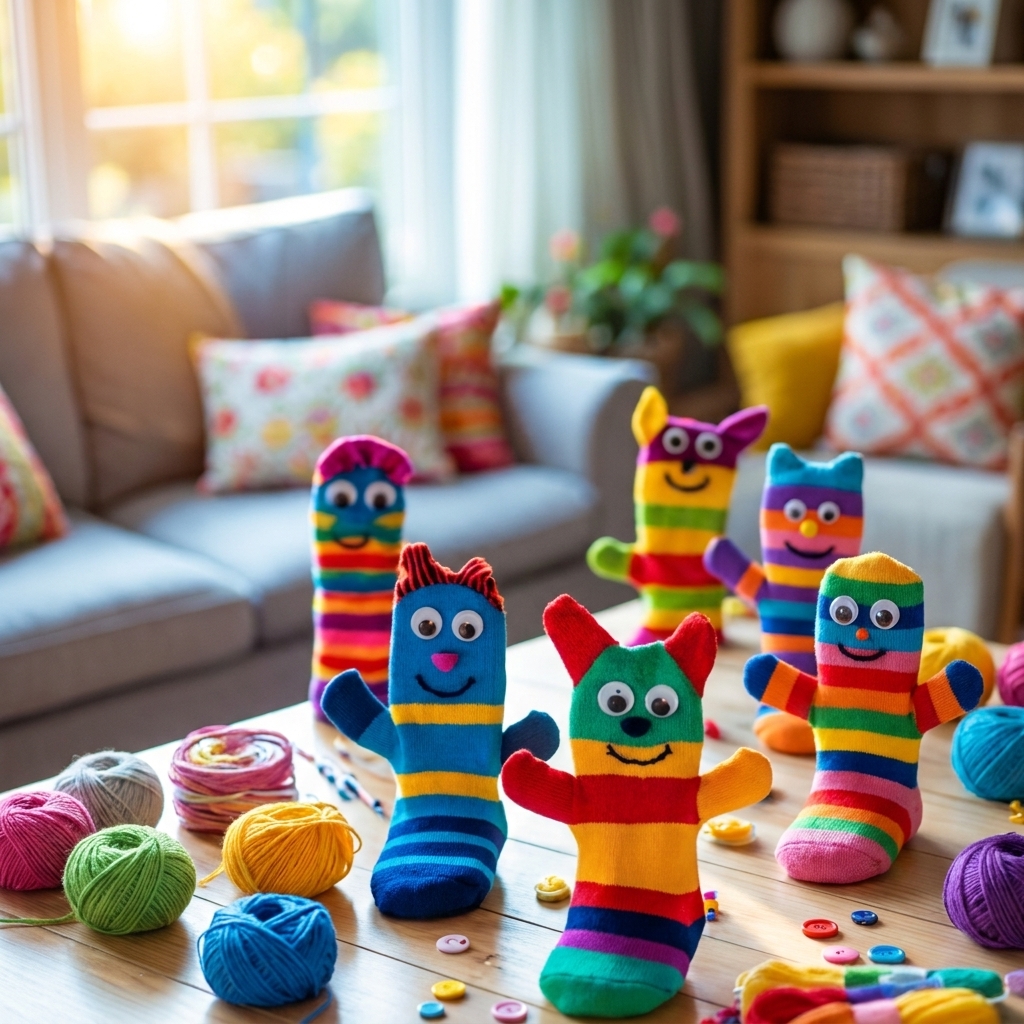
Creating sock puppets is one of the easiest and most enjoyable craft activities for children and adults alike. With just a few simple materials, an old sock can be transformed into a colorful character full of personality. Sock puppet making encourages creativity, storytelling, problem-solving, and fine motor skills while providing hours of imaginative play. Whether you’re looking for a rainy-day activity, a classroom project, or a fun family craft, sock puppets are an affordable and rewarding choice.
Before diving into the details, here’s a quick overview of the project.
| Quick Overview | Details |
| Activity | Making Sock Puppets |
| Recommended Age | 4+ years (with adult supervision for younger children) |
| Time Required | 30–60 minutes |
| Difficulty Level | Easy |
| Main Materials | Clean sock, glue, buttons or googly eyes, yarn, felt, fabric scraps |
| Skills Developed | Creativity, storytelling, fine motor skills, imagination, communication |
| Best For | Home, classrooms, parties, rainy-day activities |
Introduction
Crafting has always been a wonderful way to combine learning and entertainment. Among countless DIY projects, sock puppets remain one of the most beloved crafts because they are simple, inexpensive, and endlessly customizable. Instead of throwing away old socks, families can recycle them into charming puppet characters that inspire creative storytelling and pretend play.
Sock puppets have entertained children for generations. They can become funny monsters, friendly animals, magical creatures, superheroes, or even famous historical figures. Every puppet tells a story, and every child can invent a unique personality for their handmade creation.
Making sock puppets also introduces children to the concept of recycling and reusing household items. Rather than purchasing expensive toys, they learn that imagination can transform everyday objects into something exciting.
Why Sock Puppets Are Great Educational Tools
Sock puppets offer far more than simple entertainment. They provide valuable educational opportunities in many areas of child development.
First, children strengthen their creativity by designing unique puppet characters. They decide on colors, facial expressions, hairstyles, clothing, and personalities.
Second, puppet making improves fine motor skills. Cutting felt, gluing decorations, tying yarn, and positioning small pieces all help develop hand-eye coordination.
Third, storytelling with puppets encourages language development. Children naturally create conversations, ask questions, solve imaginary problems, and invent adventures.
Fourth, puppet play builds confidence. Shy children often find it easier to express themselves through puppet characters than by speaking directly.
Finally, sock puppets encourage emotional learning. Children can use puppets to act out feelings, discuss friendships, or practice kindness and empathy.
Materials Needed
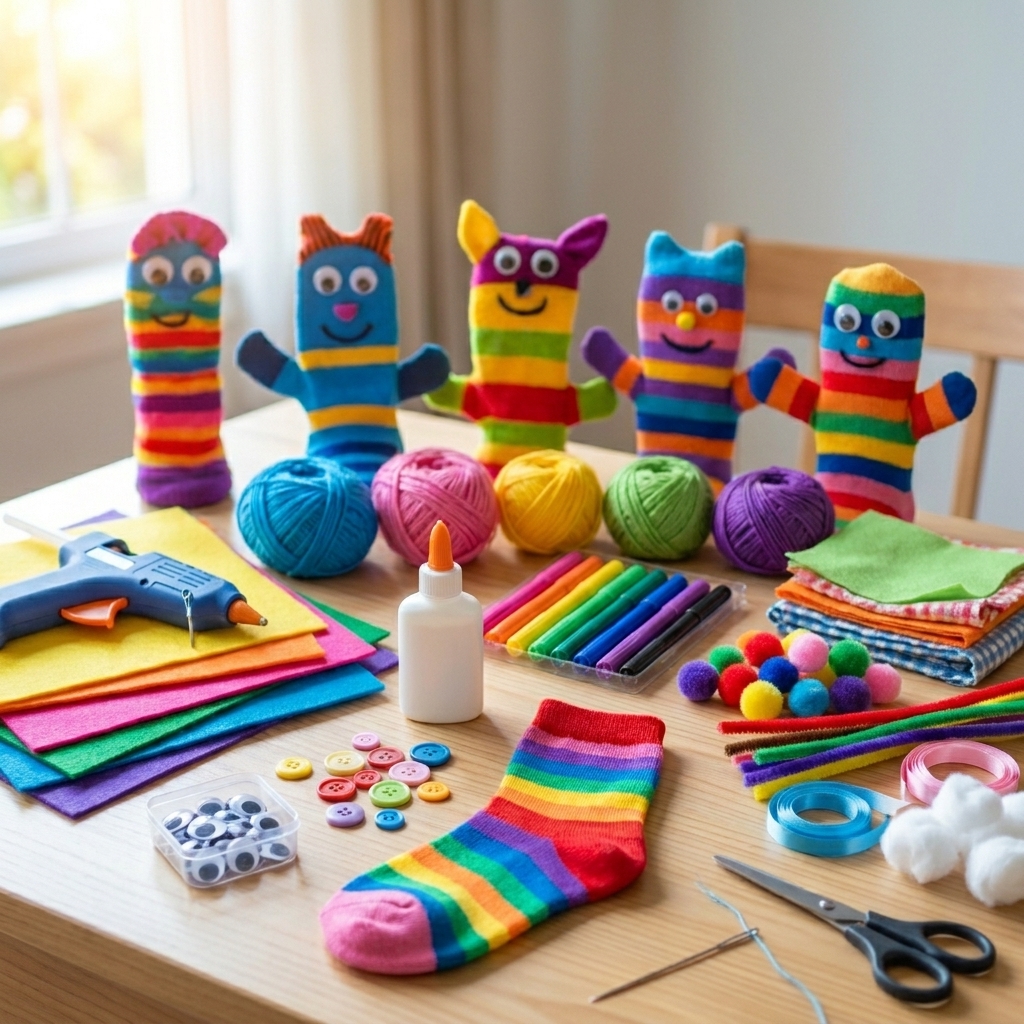
One of the biggest advantages of sock puppets is that the materials are inexpensive and often already available at home.
Basic supplies include:
- A clean sock
- Googly eyes or buttons
- Craft glue or hot glue (adult use)
- Felt sheets
- Yarn for hair
- Fabric scraps
- Markers
- Pom-poms
- Pipe cleaners
- Ribbon
- Cotton balls
- Scissors
- Needle and thread (optional)
Most families already own many of these materials, making this craft budget-friendly.
Choosing the Right Sock
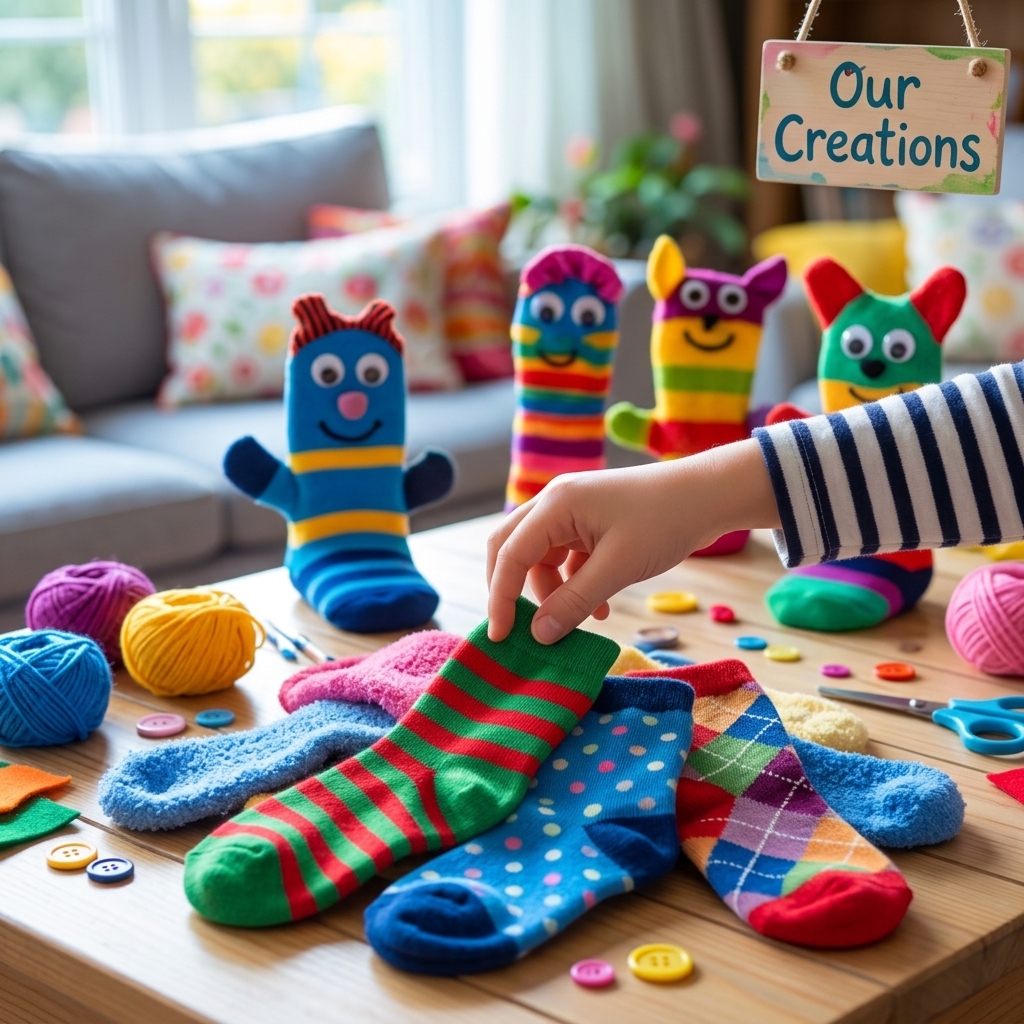
Not every sock creates the same puppet.
Long socks provide extra space for larger characters and expressive mouths.
Colorful socks naturally become exciting puppet designs without much decoration.
Fuzzy socks work well for animal puppets.
Striped socks can inspire funny monsters or silly creatures.
Clean socks without holes are usually the easiest to work with, although small imperfections can become part of the puppet’s personality.
Step-by-Step Guide
Step 1: Prepare the Sock
Wash and dry the sock before starting.
Slip your hand inside the sock and practice opening and closing the “mouth.” This helps determine where the eyes and mouth should be placed.
Step 2: Create the Face
Attach googly eyes or sew on buttons.
If using buttons, ensure they are securely attached and avoid using them with very young children due to choking hazards.
You can also cut eyes from felt if preferred.
Step 3: Add the Nose
A pom-pom makes an excellent nose.
Alternatively, use:
- Felt circles
- Cotton balls
- Small fabric pieces
- Embroidery
The nose adds personality to the puppet.
Step 4: Make Hair
Yarn is one of the most popular choices.
Cut several equal lengths of yarn.
Glue them onto the top of the sock.
Children can create:
- Long hair
- Curly hair
- Braids
- Mohawks
- Beards
- Mustaches
Step 5: Add a Mouth
Some puppets simply use the natural opening of the sock.
Others add a red felt tongue or black felt lining inside the mouth.
This creates a more realistic talking puppet.
Step 6: Decorate
Now comes the fun part.
Decorate using:
- Felt ears
- Fabric hats
- Tiny scarves
- Bow ties
- Glasses
- Pipe cleaner antennae
- Wings
- Capes
- Buttons
- Sequins
Every decoration helps create a unique character.
Creating Different Puppet Characters
Sock puppets can become almost anything.
Popular ideas include:
Animals
- Dogs
- Cats
- Lions
- Frogs
- Ducks
- Monkeys
- Rabbits
Fantasy Characters
- Dragons
- Unicorns
- Wizards
- Fairies
- Monsters
People
- Teachers
- Firefighters
- Doctors
- Pirates
- Princesses
- Astronauts
Funny Characters
- Aliens
- Robots
- Vegetables
- Food characters
- Superheroes
The possibilities are endless.
Storytelling with Sock Puppets
Once the puppets are finished, the real fun begins.
Children can invent stories featuring their characters.
Simple story ideas include:
- Visiting a magical forest
- Solving a mystery
- Going on a space adventure
- Helping friends
- Learning good manners
- Exploring the ocean
- Traveling around the world
Storytelling strengthens imagination while improving communication skills.
Puppet Shows
Building a puppet theater makes the activity even more exciting.
A cardboard box can easily become a puppet stage.
Children can:
- Write scripts
- Design backgrounds
- Create tickets
- Invite family members
- Perform short plays
These performances improve public speaking and teamwork.
Learning Through Puppets
Teachers frequently use puppets during lessons because children respond positively to puppet characters.
Sock puppets can teach:
- Alphabet letters
- Numbers
- Colors
- Shapes
- Weather
- Animals
- Healthy habits
- Safety rules
A puppet often captures children’s attention better than a traditional lesson.
Encouraging Emotional Expression
Children sometimes struggle to describe their emotions.
A puppet can help.
For example:
“My puppet feels nervous today.”
“My puppet is excited.”
“My puppet misses a friend.”
Speaking through a puppet feels less intimidating for many children.
Family Bonding
Sock puppet crafts bring families together.
Parents and grandparents can help younger children while older siblings create more detailed puppets.
Everyone can compare designs, exchange ideas, and laugh together during puppet performances.
These shared experiences often become treasured family memories.
Classroom Activities
Teachers can use sock puppets in many educational settings.
Possible classroom activities include:
- Reading stories aloud
- Acting out historical events
- Science demonstrations
- Language practice
- Vocabulary games
- Role-playing social situations
Students become active participants rather than passive listeners.
Recycling and Sustainability
Sock puppets teach valuable environmental lessons.
Old socks that might otherwise be discarded receive a new purpose.
Children learn about:
- Recycling
- Upcycling
- Reducing waste
- Creative reuse
Crafting encourages respect for resources while reducing unnecessary waste.
Safety Tips
Although sock puppets are simple to make, safety remains important.
Adults should supervise:
- Scissor use
- Hot glue guns
- Needles
- Small decorative pieces
Young children should avoid loose buttons or beads that could become choking hazards.
Non-toxic craft supplies are always recommended.
Creative Variations
After mastering basic sock puppets, families can experiment with new techniques.
Ideas include:
- Glow-in-the-dark puppets
- Holiday-themed puppets
- Dinosaur puppets
- Underwater creatures
- Seasonal characters
- Historical figures
- Storybook characters
Each new project introduces fresh artistic challenges.
Hosting a Sock Puppet Party
A sock puppet party makes a wonderful birthday activity.
Prepare craft stations with:
- Socks
- Glue
- Felt
- Yarn
- Eyes
- Decorations
After everyone finishes, organize a puppet show where each child introduces their new character.
Small prizes can be awarded for creativity, humor, or storytelling.
Benefits Beyond Childhood
Although sock puppets are often associated with children, adults also enjoy making them.
Community centers, libraries, retirement homes, and therapy programs often include puppet crafts because they encourage creativity and social interaction.
Teachers, librarians, and performers also create puppets for educational presentations.
Common Mistakes to Avoid
Beginners sometimes make simple mistakes.
Avoid using too much glue, which can create a messy appearance.
Allow glue to dry completely before playing.
Plan the face before attaching decorations.
Keep decorations balanced so the puppet remains comfortable to wear.
Most importantly, remember there is no “perfect” puppet. Every handmade creation has its own charm.
Inspiring Creativity Without Rules
One reason sock puppets remain popular is that there are very few rules.
A monster can have three eyes.
A rabbit can wear glasses.
A dragon can have rainbow hair.
Children should feel free to experiment without worrying about making mistakes.
Creative confidence grows when there are no strict expectations.
Conclusion
Making sock puppets is a timeless craft that combines creativity, recycling, learning, and fun in one simple activity. With only a sock and a few inexpensive craft supplies, anyone can create a unique character ready for storytelling, games, and imaginative adventures. Along the way, children strengthen important developmental skills such as fine motor coordination, communication, problem-solving, and artistic expression.
Perhaps the greatest magic of sock puppets is that they remind us imagination does not require expensive toys or complicated materials. A forgotten sock can become a brave knight, a friendly dragon, a talking dog, or a silly monster with just a little creativity. Whether enjoyed at home, in school, or during community events, sock puppets continue to inspire laughter, learning, and unforgettable memories for people of all ages.
